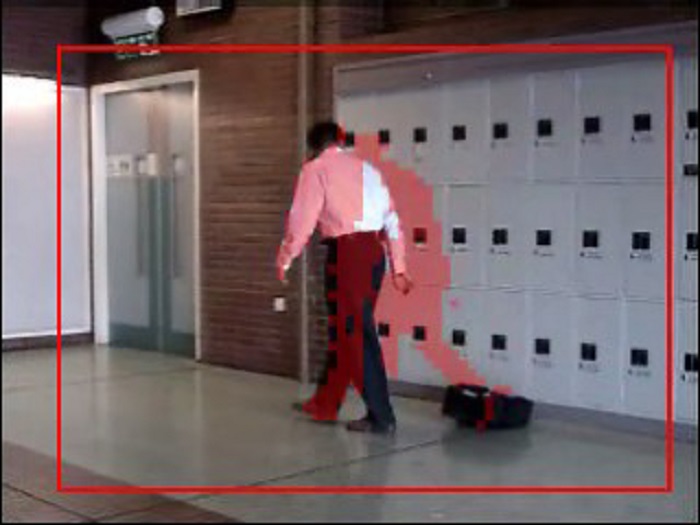
In recent years, CCTV systems have become a cornerstone of modern security, providing surveillance solutions for homes, businesses, and public spaces. One of the most transformative features in contemporary CCTV technology is motion detection. Motion detection enhances the efficiency and effectiveness of surveillance systems, allowing cameras to identify movement, alert operators, and conserve storage and bandwidth. This article explores how motion detection works in modern CCTV systems, the technologies behind it, and its practical applications.
Understanding Motion Detection
Motion detection is the ability of a surveillance system to identify changes in the visual scene captured by a camera. Unlike traditional CCTV systems that record continuously, motion-detection-enabled cameras only trigger recording when movement is detected. This reduces unnecessary footage and makes reviewing video faster and more efficient. Modern CCTV systems leverage advanced algorithms, sensors, and artificial intelligence to detect movement accurately and reliably.
Core Technologies Behind Motion Detection
Motion detection in CCTV systems relies on several underlying technologies. The most common include:
1. Pixel-Based Detection
Pixel-based motion detection is one of the simplest methods. In this approach, the camera compares the current frame with previous frames. If the difference between corresponding pixels exceeds a set threshold, the system considers it as motion. This method is widely used because of its simplicity and low computational requirement. However, pixel-based detection is sensitive to changes in lighting, shadows, or camera vibrations, which can cause false alarms.
2. Infrared (IR) Sensors
Some CCTV cameras use passive infrared (PIR) sensors to detect heat signatures of moving objects. PIR sensors measure changes in infrared radiation in their field of view. When a warm body, such as a human or animal, moves across the scene, the sensor triggers the camera to start recording. IR-based motion detection is particularly effective in low-light conditions or environments with minimal visual detail, but it may not detect non-living objects moving, such as vehicles in some cases.
3. Video Analytics and AI
Modern CCTV systems increasingly use artificial intelligence (AI) and machine learning to enhance motion detection. AI-powered systems analyze video frames in real-time to detect movement, distinguish objects, and even identify the type of motion. For example, a system may differentiate between a swaying tree branch and a person walking, significantly reducing false alarms. Deep learning models, such as convolutional neural networks (CNNs), are commonly employed to train cameras to recognize human shapes, vehicles, or other objects.
4. Optical Flow Analysis
Optical flow is a computer vision technique used to calculate the motion of objects between consecutive frames. By analyzing the direction and magnitude of movement for each pixel or group of pixels, optical flow algorithms can detect moving objects with high precision. This approach is more sophisticated than pixel comparison and is often used in high-end surveillance systems to track motion across a complex scene.
5. Combination Approaches
Many modern CCTV systems combine multiple motion detection technologies to achieve more accurate results. For instance, a camera may use pixel-based detection for general movement and AI analytics to filter out false positives caused by environmental factors like shadows, rain, or small animals. This hybrid approach ensures the system is both sensitive and reliable.
How Motion Detection Works Step by Step
Motion detection in CCTV systems typically follows a series of steps:
- Scene Monitoring
The camera continuously captures video frames of the monitored area. These frames are temporarily stored in memory for analysis. - Frame Comparison
Each new frame is compared with previous frames to detect changes. This can involve pixel comparison, optical flow analysis, or more advanced AI-based evaluation. - Change Evaluation
The system evaluates whether the detected change constitutes actual motion. This involves filtering out noise, such as lighting changes, shadows, or small irrelevant movements. - Triggering Events
Once significant motion is detected, the system triggers an event. This may include starting video recording, sending alerts to operators, or activating additional security measures like alarms or lights. - Object Analysis (Optional)
Advanced systems may perform further analysis to identify the type of moving object. AI algorithms can categorize motion as human, animal, or vehicle, allowing for context-specific alerts.
Advantages of Motion Detection in CCTV
Motion detection provides several key benefits:
- Storage Efficiency: By recording only when movement occurs, motion detection reduces storage requirements and lowers costs associated with high-capacity video storage.
- Enhanced Security: Immediate alerts triggered by motion detection allow for faster responses to potential threats.
- Remote Monitoring: Many modern CCTV systems integrate with mobile apps, sending real-time notifications when motion is detected, which is particularly useful for home and business security.
- Reduced False Alarms: Advanced AI and hybrid detection methods minimize false alarms caused by environmental factors, providing more reliable security monitoring.
Challenges in Motion Detection
Despite its advantages, motion detection also faces challenges:
- Environmental Factors: Shadows, rain, snow, or moving foliage can trigger false alarms in pixel-based or infrared-based systems.
- Lighting Changes: Sudden changes in lighting, such as turning on indoor lights or passing clouds, can be mistaken for motion.
- Camera Placement: The effectiveness of motion detection depends heavily on the camera’s angle and field of view. Poor placement can result in missed motion or excessive false alerts.
- Processing Power: AI-based systems require significant computational resources, especially in high-resolution cameras, which may increase system costs.
Applications of Motion Detection in CCTV Systems
Motion detection is applied in a variety of settings:
- Home Security: Homeowners use motion-detecting cameras to monitor entrances, driveways, and backyards, receiving real-time alerts for suspicious activity.
- Retail Stores: Businesses employ motion detection to reduce theft, monitor customer traffic, and optimize staff allocation.
- Public Spaces: Airports, train stations, and city surveillance systems use motion detection to monitor crowds, identify unusual activity, and enhance public safety.
- Industrial Facilities: Factories and warehouses utilize motion detection to protect sensitive areas, track employee activity, and monitor machinery for irregular movement.
Future Trends
The future of motion detection in CCTV systems is being shaped by advancements in AI, edge computing, and sensor technologies. Cameras are becoming smarter, capable of not just detecting motion but understanding context, predicting threats, and integrating with broader security networks. Real-time analytics, cloud processing, and improved image recognition are making motion detection more reliable, adaptable, and scalable than ever before.
Conclusion
Motion detection is an essential feature in modern CCTV systems, transforming passive surveillance into intelligent, responsive security. By combining technologies like pixel-based detection, infrared sensors, optical flow, and AI-powered analytics, modern cameras can accurately identify movement, minimize false alarms, and optimize storage. While challenges remain, ongoing innovation continues to improve accuracy, reliability, and efficiency. Whether for homes, businesses, or public infrastructure, motion detection is central to creating safer environments in today’s increasingly security-conscious world.