



When print service providers and gift retailers evaluate a commercial roll-to-roll UV DTF (ultraviolet direct-to-film) printer, the purchase decision often stalls around the headline hardware price. Comparing two machines purely on capital outlay misses the real driver of profitability: how consumables, daily maintenance overhead, and weekly capacity utilisation behave once the unit is on the shop floor.
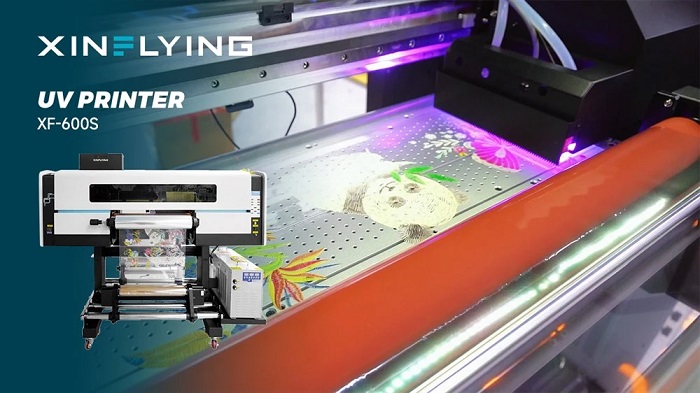
A roll-to-roll UV DTF system jets UV-curable white, colour, and varnish inks onto an adhesive release film (A-film) and laminates it inline with a clear transfer carrier (B-film) for manual application onto rigid items. Because the process relies on circulating white pigment ink, UV LED curing, and matched roll media, its operating economics behave very differently from a paper laser printer or a vinyl cutter that can sit idle for two weeks without penalty.
Separating Capital Outlay From Recurring Operating Costs
To evaluate a UV DTF line accurately, commercial buyers need to separate fixed monthly overhead from variable job costs rather than blending them into an arbitrary per-sticker estimate:
- Fixed monthly obligations: Equipment depreciation or lease payments, floor-space allocation, and climate/ventilation utilities. These costs accrue whether the shop prints five metres or five hundred metres in a month.
- Variable per-job consumables: A-film, B-film, CMYK/white/varnish ink consumption (which rises sharply on full-coverage dark-substrate graphics requiring heavy white underbases), and surface-prep supplies such as lint-free wipes and alcohol.
- Maintenance baseline: Dedicated UV cleaning fluid, cap-top/wiper replacements, and the ink consumed during scheduled nozzle checks and white-ink circulation cycles.
Treating equipment depreciation as a fixed monthly budget—rather than double-counting it inside every transfer sheet estimate—gives managers a clearer picture of true contribution margin per order.
Why Idle Days and Unbatched Runs Distort Unit Economics
Two operational habits quietly inflate unit cost in new UV DTF installations: running isolated single-logo jobs and leaving the machine idle between sporadic orders.
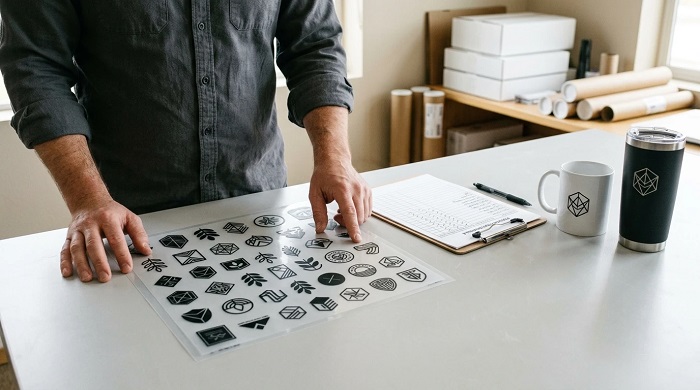
Every time an operator feeds a roll for a single 10 × 10 cm emblem and trims it off the laminator, lead-in and lead-out film waste can exceed the printed area itself. Nesting multiple client orders onto a shared gang sheet spreads that roll leader across dozens of graphics.
Equally important is weekly run cadence. Commercial UV DTF printers use pigmented white ink that settles if left static; daily circulation, periodic test prints, and preventive maintenance consume small amounts of ink and cleaning fluid regardless of whether billable orders are in the queue. A shop with steady weekly demand absorbs that maintenance baseline easily. A business that only prints one small gift batch every three weeks often spends more on upkeep and wasted film than it would have spent outsourcing transfers until order volume matures.
Capacity Utilisation and Practical Risk Controls
Before committing capital to a commercial roll-to-roll line, financial managers should map their actual weekly rigid-item demand across three practical checks:
| Financial / Operational Check | What to Measure Before Purchase | Impact on Total Cost of Ownership |
|---|---|---|
| Weekly nested film metreage | Realistic weekly print area from existing B2B gift, label, or packaging clients | Determines whether daily white-ink upkeep is a minor overhead or a major cost drag |
| Manual application labour | Minutes per piece to clean, align, and burnish transfers onto curved vs. flat blanks | Prevents underpricing labour-heavy drinkware or gift-box orders |
| Substrate scrap allowance | Expected rejection rate on unfamiliar customer-supplied rigid blanks | Protects margin when testing new coated metals, glass, or textured packaging |
Notice that manufacturer headline print speeds—measured in square metres per hour at specific pass modes—do not translate directly into billable finished products. Real throughput is capped by file preparation, gang-sheet nesting, manual application speed, and quality inspection.
Matching Machine Width and Configuration to Demand
For gift businesses and commercial print shops whose recurring order volume justifies bringing roll-to-roll production in-house, sizing the machine to actual job dimensions matters more than buying the widest roll available. Operators comparing commercial hardware can review XINFLYING roll-to-roll UV DTF systems to match film width, printhead configuration, and inline lamination capabilities to their projected weekly run volume.
Building a realistic TCO model before placing an order does not require optimistic sales forecasts. Start with your confirmed repeat orders, price in regular maintenance consumables and bench-application time, and verify that your weekly print cadence keeps the machine working rather than sitting idle.